
Exploring Innovations in Cardiac Electrophysiology
Welcome to our research hub, where we delve into groundbreaking methods to enhance cardiac care through innovative techniques like EpiCO₂.
EpiCO₂ Epicardial Access Research Programme
The EpiCO₂ Epicardial Access Research Programme is dedicated to advancing the safety and efficacy of epicardial ablation procedures. Our aim is to evaluate the use of pericardial carbon dioxide insufflation to create a safer environment for coronary vein exit, particularly in patients with ventricular tachycardia and atrial arrhythmias. This method offers a novel approach to visualizing pericardial adhesions, potentially reducing the risks associated with traditional subxiphoid puncture techniques.

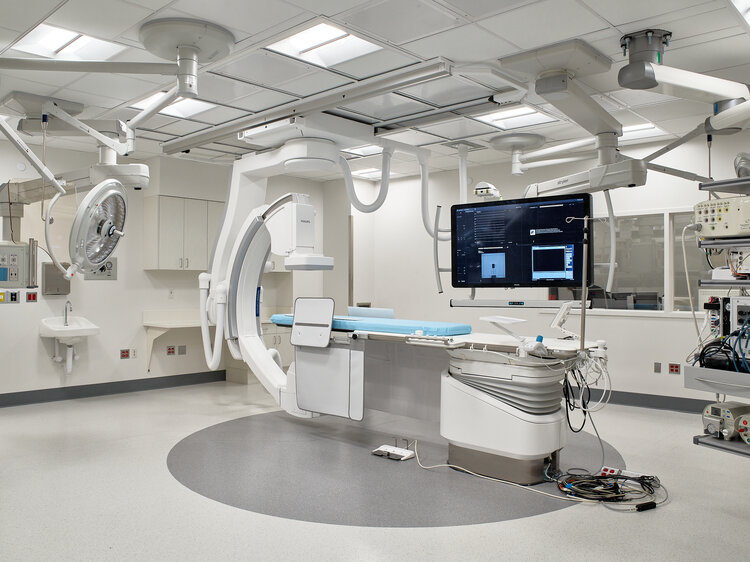
What is EpiCO₂ ?
EpiCO₂ refers to an epicardial access strategy in which:
-
- A distal coronary vein branch is intentionally exited
- Carbon dioxide is gently insufflated into the pericardial space
- The gas creates a transient “cushion” that defines the space around the heart and can reveal pericardial adhesions before a subxiphoid needle is introduced
Published data, including large series from centres associated with the Sussex team, show that this technique can classify adhesions, guide the decision to proceed with epicardial puncture, and may reduce complications in selected patients.
Why EpiCO₂ Matters?
Epicardial ablation is often required when the arrhythmia substrate lies on the outer surface of the heart, particularly in ventricular tachycardia and some challenging atrial arrhythmias.
Pericardial adhesions increase the risk of complications during epicardial access; EpiCO₂ provides a way to recognise adhesions before committing to a needle puncture, helping operators plan a safer route—or decide not to proceed.
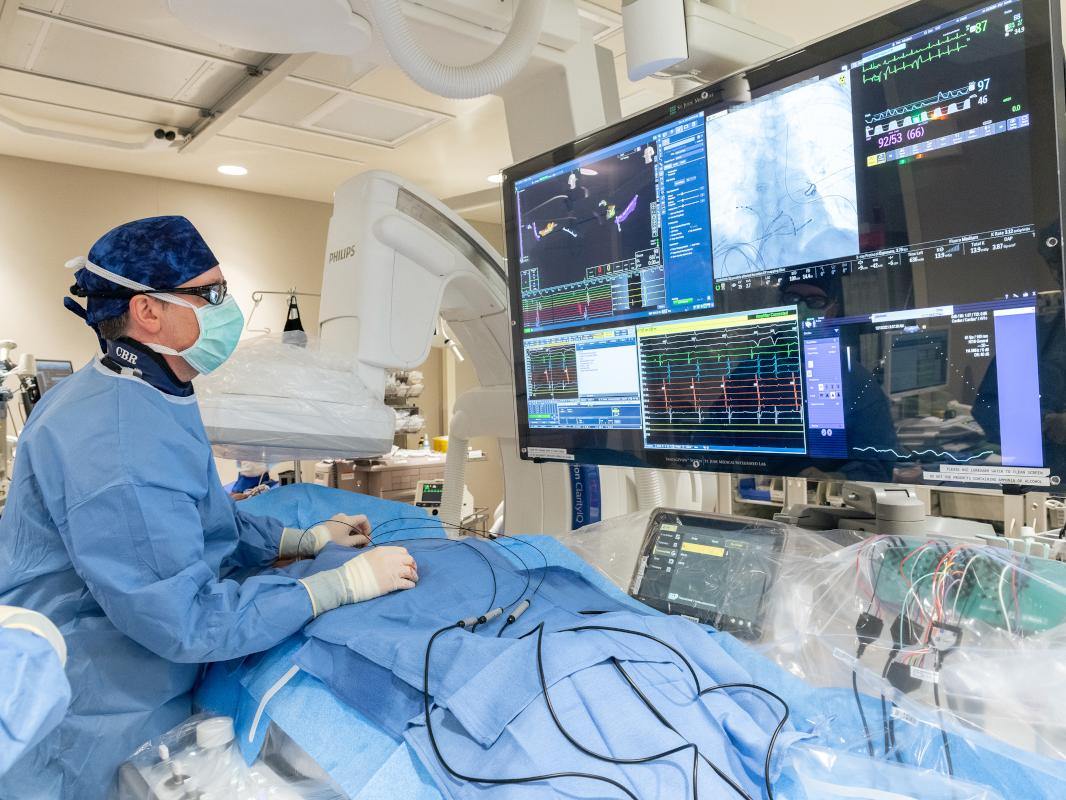

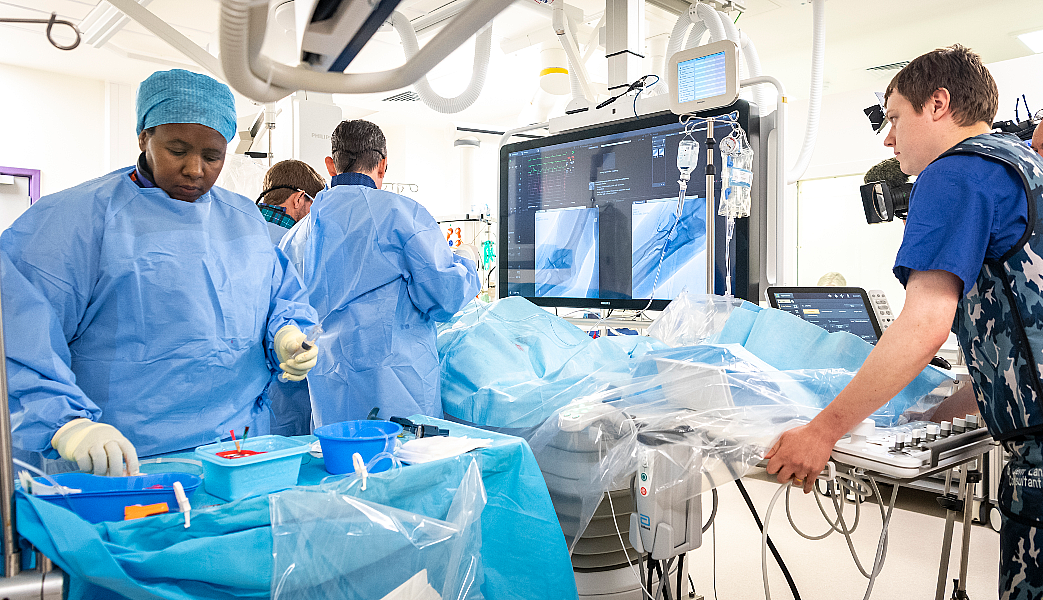
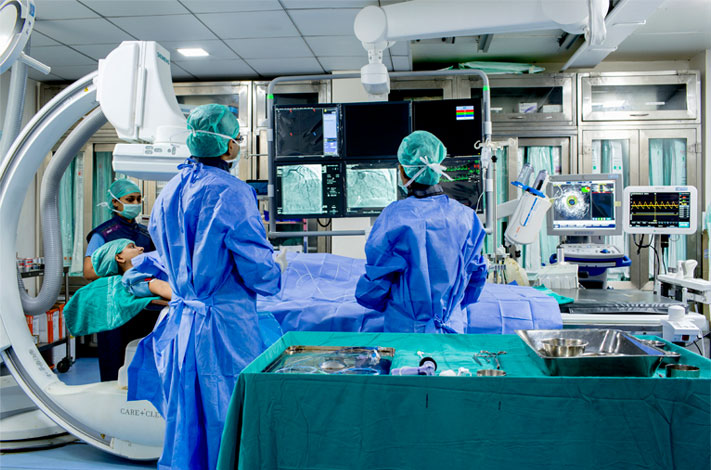
EpiCO₂ Procedures
EpiCO₂: Example 1
EpiCO₂: Example 2
EpiCO₂ Publications
Get in Touch
Address
Royal Sussex County Hospital, Eastern Road, Brighton, BN2 5BE